702010 learning model
How to make development stick

The 70:20:10 model is popular for a reason. It reminds us that most capability is built in the flow of work, not in a classroom. When learning is embedded into everyday tasks, organisations can respond to change faster and upskill people in a way that lasts.
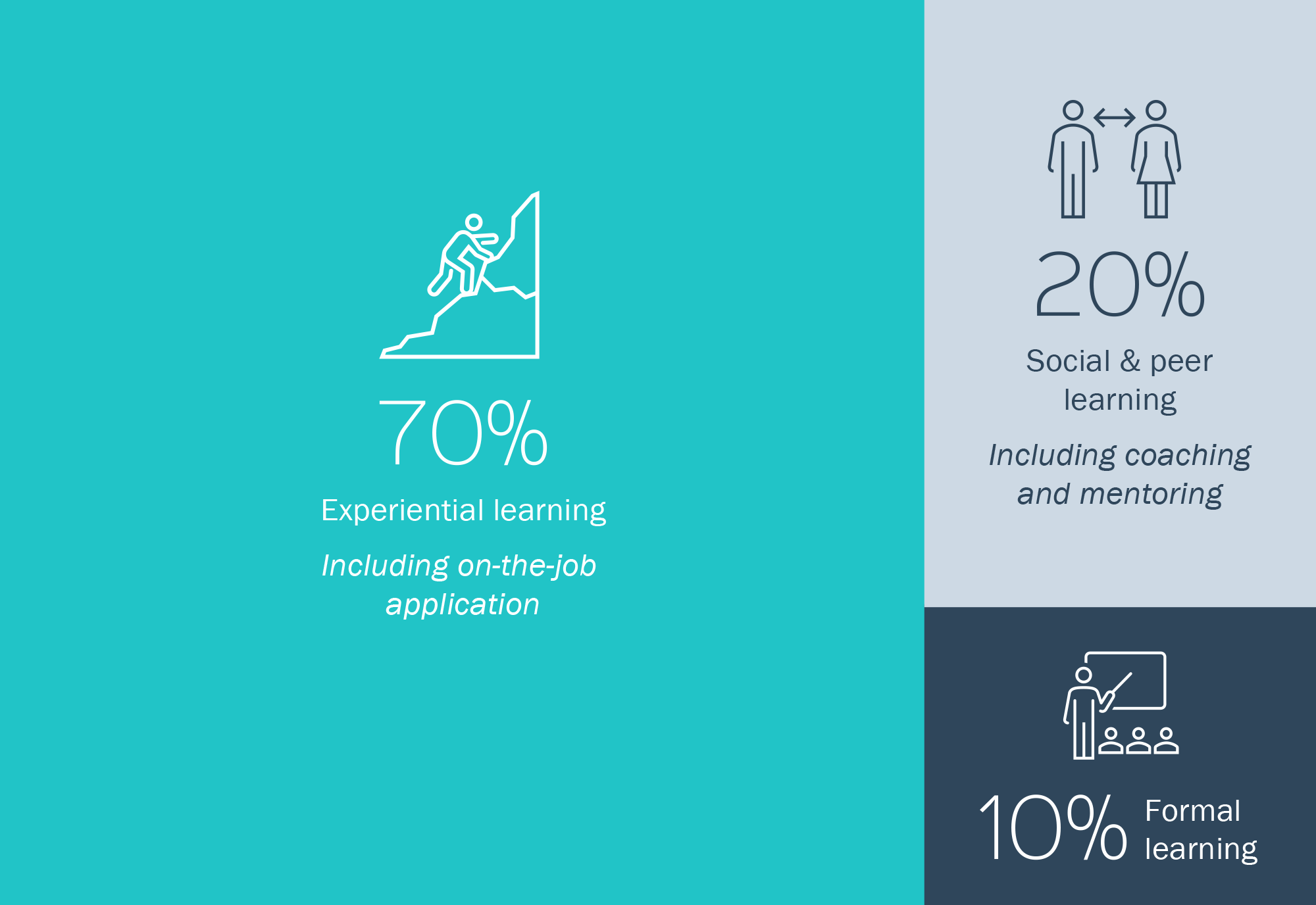
Put simply, the model suggests
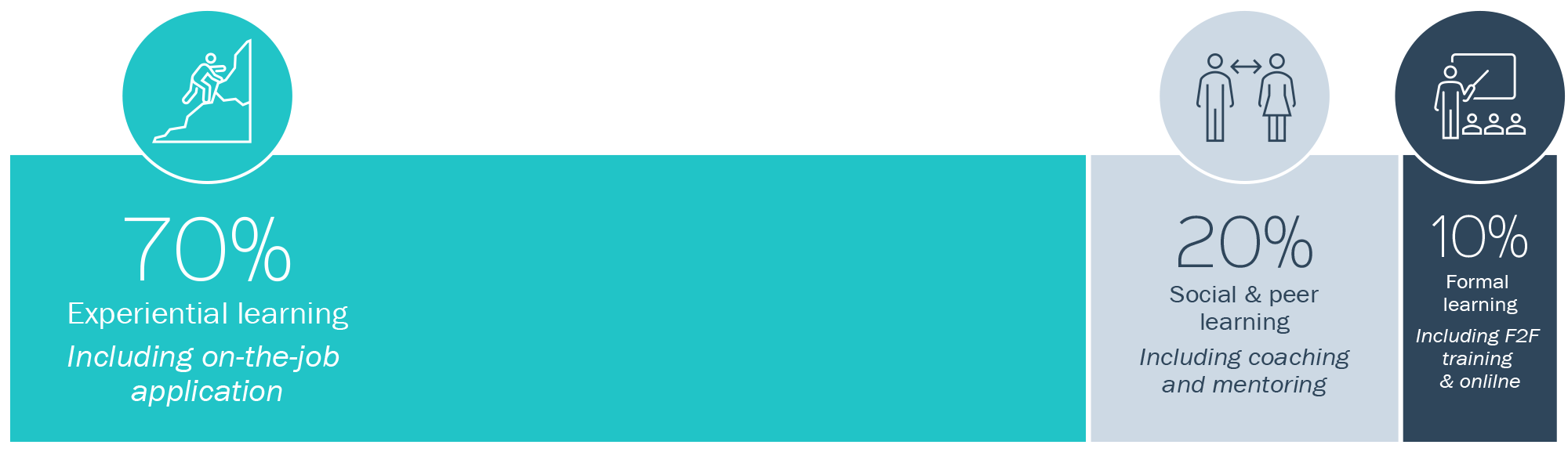
- 70% of learning comes from on-the-job experience and practice
- 20% comes from social learning such as coaching, mentoring and teamwork
- 10% comes from formal learning such as workshops, courses and eLearning
The exact percentages matter less than the balance. The key is to weight programs toward the 70 and 20, rather than relying mainly on formal training to build skill.
Want a practical way to shift learning into the flow of work? Book a discovery call.
Understanding the 70:20:10 model for learning
The purpose of 70:20:10 is to make learning a normal part of daily work for leaders and team members. It helps move development out of “optional extra” territory and into the habits and rhythms that actually build capability.
The 70%: experiential learning
Most development happens when people are doing real work, solving real problems, and reflecting on what worked and what did not.
Experiential learning includes:
- taking on real projects and stretch tasks
- practising a new skill in live situations
- trying a new approach, learning, then adjusting
- making decisions and learning from the outcome
To make the 70% easier, organisations can build deliberate practice into day-to-day tasks and create role-specific learning expectations. A learning management system can support this by guiding content and tracking activity, but the learning itself should happen on the job.
The 20%: social learning
Social learning is the learning that happens through other people. Coaching, mentoring, observation and teamwork all help people lift faster because they can see what good looks like, talk through challenges, and build confidence.
Social learning can include:
- regular coaching conversations
- peer learning and observation
- mentoring partnerships
- team problem-solving and sharing what is working
This complements formal learning by turning knowledge into shared practice and building a culture where development is normal, not awkward.
The 10%: formal learning
Formal learning still has a place. It can introduce frameworks, language and tools quickly. The risk is when formal learning becomes the main event and practice is left to chance.
Formal learning can include:
- workshops and courses
- webinars
- videos and eLearning
The goal is to keep formal learning sharp and useful, then shift quickly into practice and coaching.
Implementing the 70:20:10 model in your organisation
Implementing 70:20:10 is not just a program change. It is a mindset shift. It starts with understanding how development happens today, then making practical changes so on-the-job learning and social learning become the default.
There are three steps to start with:
- Assess current learning practices
- Set goals and objectives
- Build an actionable plan
Assessing current learning practices
Start with a simple audit of your learning activity and where time is really being spent.
For the experiential component (the 70):
- What opportunities exist for people to learn on the job
- How often are people practising the skill in real work
- Do people get time to reflect and adjust
- What feedback do employees give about their learning experience
For the social component (the 20):
- How often do coaching conversations happen
- Are there mentoring or buddy structures
- Do teams share what is working across peers
- Are leaders calibrated on what good looks and sounds like
For the formal component (the 10):
- What formal training exists today
- How long is it, how often, and what does it cover
- Does it lead into real practice, or does it sit on its own

Setting goals and objectives
Once you have the audit, set goals based on the gaps you can see.
Examples:
- Experiential learning goals might include expanding project-based learning or introducing job rotations.
- Social learning goals might include launching mentoring partnerships or increasing coaching cadence. Targets such as “increase mentoring partnerships by 20% in Q1” can help create focus.
- Formal learning objectives might focus on tightening content so sessions stay high-impact and support on-the-job practice, rather than trying to do everything.
The key is to keep goals practical and measurable, and link them to the outcomes the business cares about.
Developing an actionable plan
Turn the goals into a plan that includes:
- the learning outcomes you are aiming for
- which learning mode supports each outcome (70, 20, 10)
- timeline, budget, and resources
- how you will review what is working and adjust
Leadership buy-in matters here. If leaders do not protect coaching time and create space for practice, the 70 and 20 will stay theoretical.
Benefits of adopting a 70:20:10 approach
A well-balanced 70:20:10 approach helps teams build capability faster because learning is applied immediately.
Common benefits include:
- faster skill acquisition through real-world application
- stronger coaching and peer support habits
- lower reliance on long formal training blocks
- better agility as teams adapt to changing priorities
- higher engagement because learning feels relevant
- stronger retention when people can see their growth

Leveraging technology to support the 70:20:10 model
Technology can help, especially when it reduces admin and makes practice visible.
Used well, platforms can:
- guide on-the-job learning with prompts and simple resources
- support coaching and mentoring through shared notes and focus areas
- track activity and progress without adding reporting burden
- deliver short formal learning that supports the work
This is where YakTrak can support the method. We use the platform to create visibility, transparency and accountability for the habits that build capability, not just course completion.
If your learning model includes coaching and QA linked to performance, YakTrak can also provide line of sight between behaviour and outcomes like AHT, FCR, NPS, conversion, retention and compliance.
Want to see how YakTrak supports learning in the flow of work? Book a demo.
Frequently asked questions
Got questions? These FAQs explain what YakTrak is, how it fits, and the outcomes to expect so you can choose the right pathway with confidence.
The 70:20:10 model suggests that most learning is acquired through job-related experience and reflection (70%), supported by coaching, mentoring and peer interaction (20%), and topped up with structured learning such as workshops and eLearning (10%).
Start by auditing current learning practices, then shift the balance toward on-the-job practice and social learning. Introduce stretch tasks and projects, expand decision-making opportunities, increase coaching cadence, and use formal learning as a sharp support, not the centrepiece.
Behaviour shifts when practice becomes part of the operating rhythm. Teams see more impact when leaders protect coaching time, set clear expectations for on-the-job application, and follow up on what was practised. The model works best when small, repeatable micro-behaviours are tracked and supported, not left to chance.
The most useful signals come from what people are doing, not just what they've completed. Look for increased practice frequency, better coaching conversations, faster uplift in role-specific behaviours, and links to measures like AHT, FCR, NPS or conversion where relevant. Consistent reflection and review cycles help teams see what's working and refine their approach over time.
A few patterns show up often: over-investing in formal training, assuming social learning will "just happen", and not giving people time to practise in real work. Another common pitfall is lack of visibility---leaders can't reinforce what they can't see. Making coaching cadence and practice activity visible helps avoid these gaps.