ACDC coaching
Practical conversations that change behaviour

ACDC helps leaders run short coaching conversations that move one behaviour at a time and create a clear commitment to practice.
Why coaching often does not translate into performance
Coaching is meant to lift performance, build confidence and grow capability. In many contact centres, the intent is there, but the impact is uneven.
We see a few common reasons:
- Coaching stays high-level and does not get specific enough to change behaviour.
- Goals are too big or too long-term for day-to-day execution.
- Practice is left to chance, so habits slide back under pressure.
- Leaders are not always calibrated on what “good” looks and sounds like.
Want a simple coaching pattern leaders can use this week? Talk with a consultant.
What the GROW model is good for
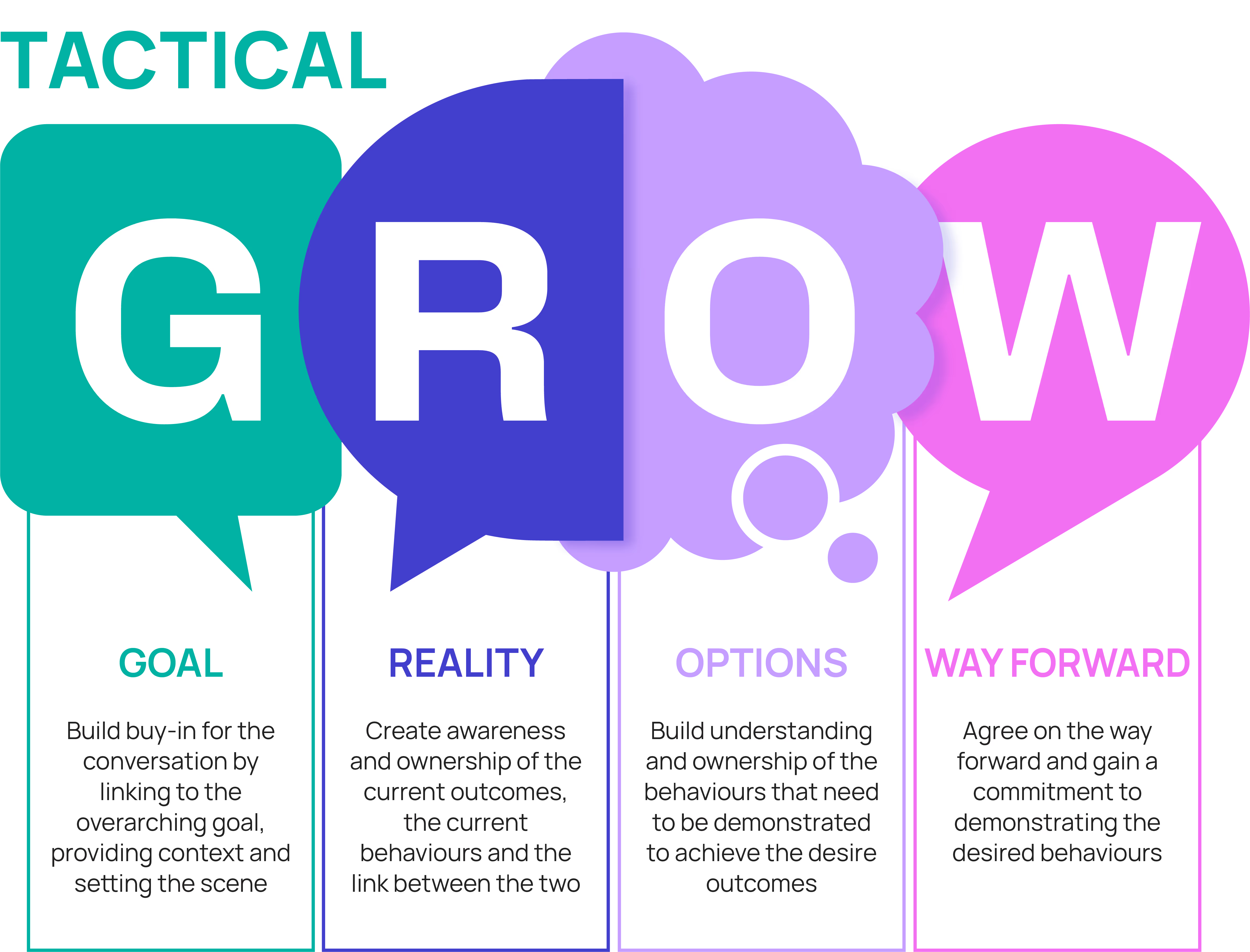
The GROW model is a well-known framework developed in the 1980s. It structures a coaching conversation into four steps:
- Goal: what you are aiming for
- Reality: what is happening now
- Options: what could you do
- Will: what you will do next
It works well for bigger, reflective conversations such as quarterly or annual development discussions. It helps people step back, think clearly about direction, and plan for longer-term goals.
Where GROW can fall short for day-to-day coaching
For tactical coaching and feedback conversations that drive weekly improvement, GROW can stay too broad. Leaders can leave with a good discussion, but not a clear behaviour to practise on the next call.
In our experience, that gap is one reason many coaching programs struggle to deliver measurable return. When the goal stays too big or too far away, inaction becomes the most likely outcome. GROW can support career conversations, but it is not built for frequent, in-the-moment behavioural coaching.
What ACDC is and why it works
ACDC is a tactical behavioural coaching model designed for performance conversations in the flow of work. It is built for short interactions that:
- Focus on one outcome you want to shift.
- Identify one micro-behaviour to improve.
- End with a clear commitment to deliberate practice.
It gives leaders a step-by-step structure while still letting them coach in their own style. The difference is that each phase includes specific micro-behaviours that guide the moments that matter, so coaching stays practical, consistent and measurable.
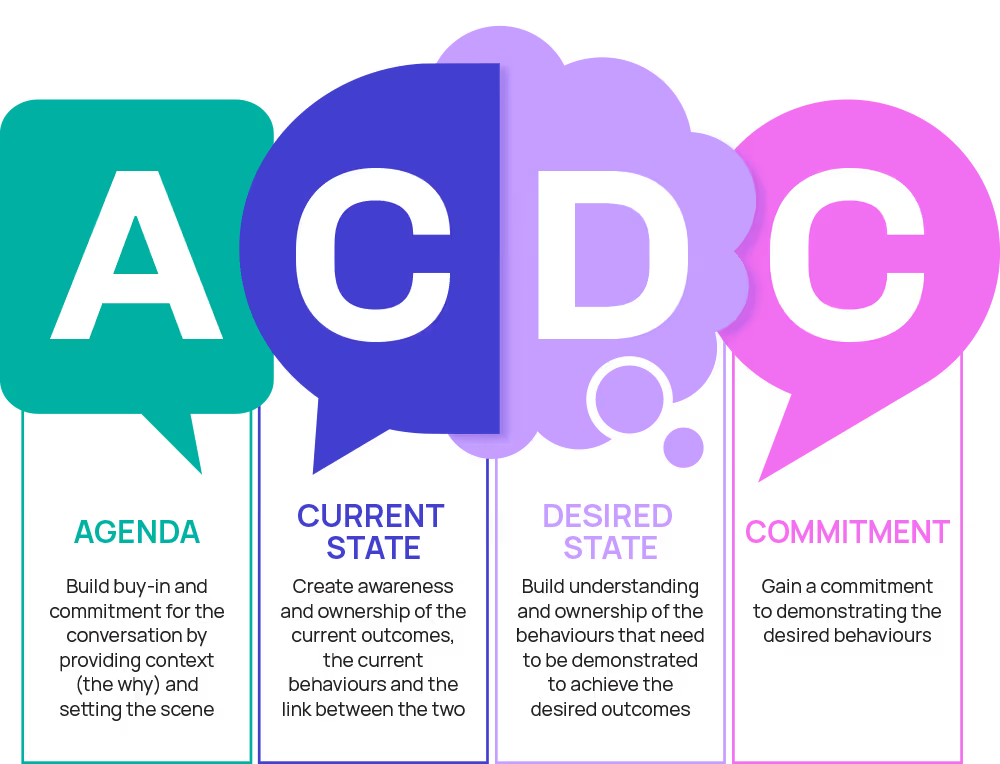
How ACDC works in four phases
1) Agenda
Start with clarity. Set the focus, purpose and steps so the team member knows what the conversation will cover and why it matters.
2) Current state
Build self-awareness. Use observation and feedback to link what is happening now to the outcomes being achieved. This is where motivation for change is created.
3) Desired state
Create the case for change and build the skill. This is where ACDC gets practical and high-impact. Leaders use deliberate practice and in-the-moment role play to rehearse the new micro-behaviour in a safe way before it shows up on real calls.
4) Commitment
Lock it in. Set a small, tactical goal linked to the bigger outcome. The goal is specific enough to practise immediately and easy to review in the next check-in.
ACDC draws on the principle behind marginal gains. Break the goal down, practise one behaviour, and build momentum through small wins.
Want the four phases with the key micro-behaviours under each? Explore the ACDC framework.
The foundation: delivery skills
The four phases provide the map. Our five core delivery skills make sure the conversation feels natural, builds rapport, and lands with impact.
They help leaders communicate clearly, listen properly, ask better questions, and keep the tone constructive. In practice, these skills are what stop ACDC feeling like a script and make it a coaching conversation people want to come back for.
Why deliberate practice and in-the-moment role play matters
Role play can be polarising, but it is also one of the fastest ways to change behaviour. ACDC makes full use of deliberate practice in the Desired State phase because talking about change is not the same as doing it.
When people rehearse the new micro-behaviour in the moment, they build confidence, remove ambiguity, and reduce the “I’ll try” gap. That is why ACDC tends to create visible shifts sooner than coaching models that stay mostly discussion-based.
Performance issues aren’t always skill issues
When performance stalls, the missing piece is not always another skill, sometimes it’s the mindset sitting behind the behaviour.
This on-demand session helps leaders spot mindset barriers, surface unhelpful beliefs, and ask sharper questions that shift behaviour, including coaching high performers.
YakTrak’s integrated approach
ACDC works best when coaching is consistent and progress is visible. That is where YakTrak fits.
We bring method plus platform together as one performance enablement system, creating faster, smarter pathways from coaching intent to measurable change:
- Define what good looks and sounds like
We help you identify the micro-behaviours that matter by role and scenario so coaching stays focused on what predicts better outcomes. - Embed practice into weekly rhythms
Leaders have a simple cadence for short coaching touchpoints that keeps ACDC in the flow of work, not as a one-off activity. - Make progress visible
YakTrak provides visibility, transparency and accountability for what is being coached and practised, not just what was discussed. - Link behaviours to outcomes
Where appropriate, we connect behavioural focus areas to metrics like AHT, FCR, NPS, conversion, retention and compliance so leaders can see what is shifting and why. - YakTrak-powered AI, if you choose to use it
Supports clearer, more specific goals so coaching stays practical and evidence-based.
See how the platform supports leaders and teams. Book a demo.

Benefits leaders and teams notice first
ACDC tends to lift performance because it is simple, repeatable, and built for the reality of contact centre work.
Common early shifts include:
- More consistent coaching cadence across leaders and sites.
- Clearer feedback linked to observable micro-behaviours.
- Stronger ownership because goals are specific and actionable.
- Better line of sight from coaching focus to the outcomes on the scorecard.
- Speed to proficiency: mastery in weeks, not years. ACDC focuses on the 20% of coaching behaviours that drive 80% of the results, so leaders build usable capability quickly.
ACDC gave VicRoads leaders a shared coaching language and a clear baseline, helping them run more consistent, high-quality conversations that lifted confidence, alignment and performance across teams.
Frequently asked questions
Got questions? These FAQs explain what YakTrak is, how it fits, and the outcomes to expect so you can choose the right pathway with confidence.
GROW works well for bigger, reflective development conversations, but it often stays too broad for day-to-day performance shifts. ACDC is built for short, tactical coaching. It narrows the focus to one outcome, one micro-behaviour and one practice commitment, so leaders can help people improve on the next call—not the next quarter.
ACDC is designed for real contact centre rhythms, so conversations are short. Most fit comfortably into a regular coaching touchpoint and focus on one behaviour at a time. The structure helps leaders get clear, practise in the moment, and lock in a commitment without turning it into a long meeting.
In the Desired State phase, leaders shift from talking about the change to rehearsing it. This might be a quick role play or micro-scenario that lets the team member try the behaviour in a safe setting. It removes ambiguity, builds confidence, and makes it easier for the behaviour to show up consistently on live calls.
ACDC works best when coaching cadence, micro-behaviours and practice commitments are visible. YakTrak creates that visibility and accountability by tracking who is coaching who, how often, and on what. It helps leaders embed ACDC into weekly rhythms and link behavioural focus areas to outcomes like AHT, FCR, NPS, conversion, retention and compliance.
The early shifts tend to be operational: more consistent coaching cadence, clearer feedback, and stronger ownership because goals are small and tactical. Leaders also get faster visibility of what’s changing on the floor, making it easier to connect coaching focus with movement in performance metrics.
Each micro‑behaviour connects to a known outcome: framing reduces handle, probe‑then‑confirm supports FCR, early empathy lifts NPS, and plain‑language policy steps protect compliance. Behavioural evidence is tied to associated metrics so leaders can see what is working and where teams need more support.
Want coaching conversations that lead to action on the next call?
Want coaching conversations that lead to action on the next call?
Book a demo to see how ACDC coaching and YakTrak help leaders focus on the right behaviours, keep practice going weekly, and track progress to outcomes.