Caitlin designs with creativity and care. She turns complex needs into clear, usable product that makes coaching and QA easier for leaders and teams.
See how Caitlin used purposeful experimentation to lift AI use and productivity.

Our best feature is our people. They bring deep experience, practical support, and an energy that helps learning land. More than half our team has been with the business for over 10 years, and some for more than 20 — giving clients continuity, trust and a strong feel for what actually works. They help organisations align around the same language, make behaviour change feel doable, and bring the right mix of support, challenge and enthusiasm to the work.
Caitlin designs with creativity and care. She turns complex needs into clear, usable product that makes coaching and QA easier for leaders and teams.
See how Caitlin used purposeful experimentation to lift AI use and productivity.

Mimi’s superpower is turning complex ideas into stories people remember. She builds confidence fast, so new skills show up in real conversations and customers feel the difference.
Discover how Mimi helped cut repeat calls and AHT at a leading Australian bank.

Known for energetic, inclusive facilitation, Mike makes change contagious. He designs simple operating rhythms that turn goals and coaching into measurable habits, so teams improve week by week.
Watch Mike unpack mindset's impact on performance.

Inga brings calm curiosity. She makes tough conversations safe, stretches thinking, and turns debate into small, repeatable behaviours leaders can coach tomorrow.
Discover how Inga helped add $951m FUM at a major super fund.

A visionary innovator who makes ideas usable. Peter blends behavioural science and tech into simple operating rhythms, so teams act fast and results move in weeks.
Discover Peter’s practical innovation: YakTrak + Amazon Connect Contact Lens - turn detection into resolution.

Deb goes above and beyond. Never satisfied with anything but exceptional, she turns complex programs into simple habits teams repeat, lifting confidence, consistency and customer outcomes.
Discover how Deb helped a health insurer become the #1 sales contact centre.

Engaging, supportive and challenging, David’s facilitation helps people push themselves. He builds simple rhythms and feedback loops so new behaviours stick and performance lifts.
David’s facilitation playbook: micro-behaviours, behavioural psychology, operating rhythm.

Stacey turns research into clear next moves. She blends curiosity with rigour to find the behavioural levers that lift customer and team outcomes.
See how Stacey turns insight into action.

Brad empowers teams to coach well, often and with purpose, translating objectives into simple habits that unlock potential and move the metrics that matter.
Unlock potential with purposeful coaching at scale.

Grounded in psychology, Jess understands the why. She connects input to output with kind, challenging coaching that builds confidence, consistency and measurable results.
From why to what to results—Jess’s consulting approach.

Sean designs learning that sticks. He blends enthusiasm with accountability, turning change programs into everyday habits that lift confidence, consistency and customer outcomes.
See how Sean helped build confident leaders with a simple YakTrak rhythm.

Jasmin designs learning that changes how people work. She distils complexity into simple, practical tools and structured experiences so new behaviours stick and teams apply what they learn straight away.
See how learning becomes behaviour change.

Kate connects dots others miss. She pairs behavioural analytics with clear storytelling to help leaders coach what matters.
See Kate’s blend of data and design in action.

Marty makes complicated projects easy. He sets clear rhythms and removes noise so the right work happens at the right time.
How Marty turns plans into progress.

Lucy keeps complex programs calm and moving. She builds simple, reliable workflows so facilitators and clients can focus on outcomes.
See how Lucy makes delivery seamless.

Dan pairs technical excellence with collaborative leadership, shaping YakTrak’s architecture so coaching, data and compliance workflows are clearer, more measurable, and easy to use.
Explore the platform Dan helps shape.

Methodical and diligent, Jayshree builds smooth, transparent experiences. She supports adoption with structure, calm thinking and fast follow-through solving problems quickly so teams get answers and momentum without the wait.
See how Jayshree helps Improve customer outcomes.
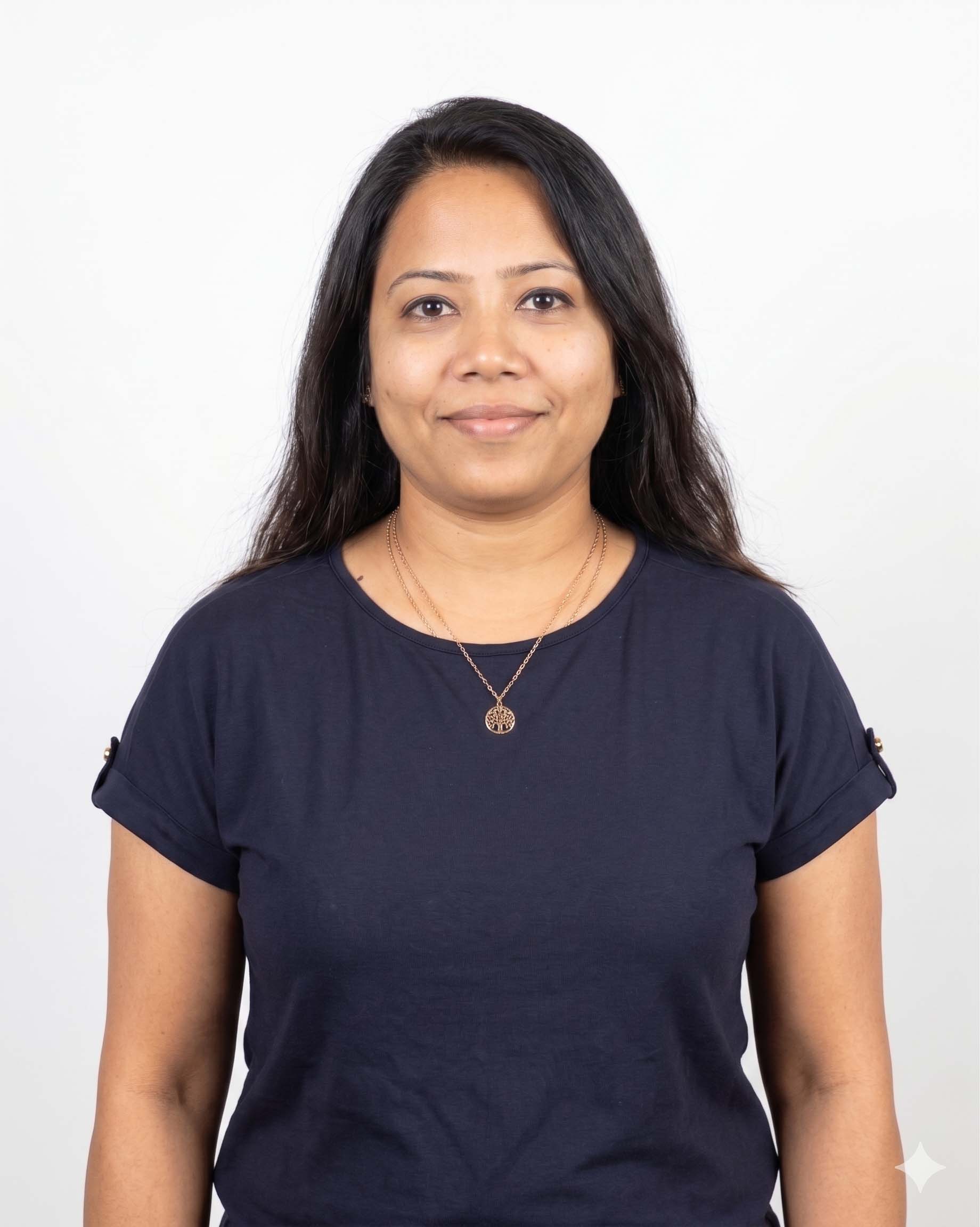
Kirk turns complex requirements into clean, reliable products. A full-stack developer, he builds fast, intuitive experiences that feel simple for users and solid for teams.
Explore the platform experience.

For a qualified psychologist, Lisa has an astounding passion for numbers! Her budgetary forecasts and critical thinking inform all our business decisions. Her consistent focus on the accuracy and transparency of financial data provides a significant level of both comfort and clarity within YakTrack.

Jane is YakTrak’s creative spark. With an eye for design, an intuitive approach to problem-solving and a client-centric mindset, Jane can always be relied on to get the job done, in a seemingly effortless way.

Explore insights and practical thinking from across the YakTrak team, with blogs written by team members and case studies drawn from the projects they’ve helped deliver - all designed to help lift CX, sales, compliance and coaching quality each week.

compare YakTrak to the existing paper based/pdf system used to track observation, coaching, team meetings and weekly performance/activity commitments.
Duration: 6 months
Channels: Branches & Contact Centre
Participants:
Digitising coaching rhythms and behavioural expectations drives better adherence and measurable improvements in key banking metrics.
“The team love it; it helps hold them accountable and they are coming better prepared to our coaching sessions.”
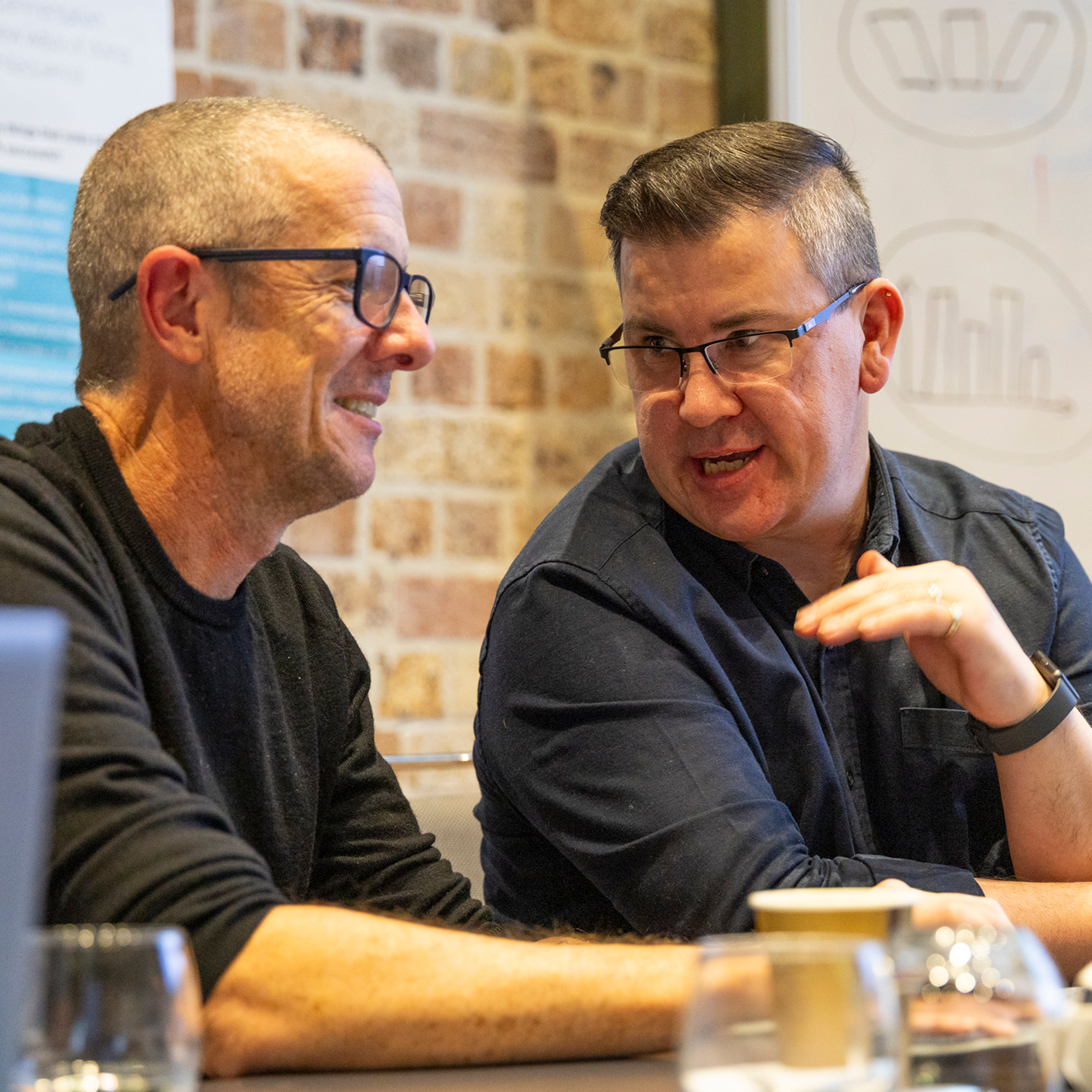
Leaders were coaching without a consistent structure in a highly regulated environment, and scripted conversations left agents lacking confidence to hold natural, human conversations.
Structured rhythms plus targeted micro-behaviours deliver fast, measurable performance improvements.
"YakTrak gave leaders a finger on the pulse - clear data on what was being coached, where it was working, and what to focus on next"

Small, targeted experiments can create meaningful behaviour change and measurable business impact.
“Growth doesn’t always come from one grand idea but often from a series of smaller, impactful changes. I learned to just do it—what do I have to lose?” – Sales contact centre manager

EnergyAustralia wanted to embed a consistent leadership and conversation framework across frontline teams to lift customer experience, sales conversion and employee engagement on its path to becoming Australia’s top contact centre.
The program approach focused on:
Embedding a leadership framework, supported by a visible coaching cadence, can drive measurable improvements in customer, employee, and commercial outcomes.
“YakTrak was a clear standout against other technology solutions due to its out of the box functionality and intuitive design, which made it incredibly easy to embed. YakTrak provides an insightful overview of the adherence and quality of our coaching and development cadence.”— Sean Francis, Engagement and Communication Lead, EnergyAustralia

To deliver on a large-scale modernisation and digitisation strategy, the insurer needed leaders with stronger adaptive leadership capability, improved data and digital maturity, and the ability to apply new skills directly to productivity and performance challenges.
Agile learning sprints with low time commitment and on-the-job experimentation can lift leadership capability and data maturity while improving day-to-day performance.
Client perspective
“Previously, I only had agile-adaptive mindset when things were going well. This learning sprint has helped me expand to having the mindset in changing circumstances, challenges and ambiguity.” – Participant leader
“Introducing regular feedback loops within the team has significantly enhanced communication and collaboration. Team members are now more engaged and proactive in addressing issues, resulting in smoother project execution and a stronger sense of collective ownership.” – Participant leader
“Staff knowledge has been broadened…team engagement has improved, and my own time has been freed up to spend more time working on the business instead of in the business. Found time to work on new reports, business process improvements… Shorter turnaround times on queries have resulted in better customer service and outcomes.” – Participant leader
“I have used many of the tecjniques and behaviours from sprint 1 and our huddles, whilst avoiding negative behaviours, like defaulting to quick fixes. The sulture change has been amazing!” – Participant leader

At the Auscontact National Conference, YakTrak and GRIST explored a simple but powerful idea: Do you trust your leader? Prove it.
Trust is not just built through intentions. It is built through consistent experiences, clear expectations and follow-through. In contact centres, where pressure is high and change is constant, the way we build those experiences matters more than ever.
That is why GRIST’s concept of micro-behaviours, together with AI, can unlock performance at scale.
GRIST’s Psychology of Performance model offers a practical way to understand what drives improvement:
Experience → Mindset → Behaviour → Results.
Experiences determine mindsets, which guide behaviour and ultimately drive results.
When experiences are positive — clear direction, regular coaching, the freedom to contribute without fear — people build stronger mindsets and better behaviours.
But when expectations are vague, difficult or unrealistic, frustration builds fast. Watching others succeed while feeling stuck can lead to disengagement. Over time, people can give up, falling into the learned helplessness effect.
It’s something we see every day when people are left guessing what success actually looks like.
Insights from 18,000 assessed goals
When YakTrak studied over 18,000 goals, the results were striking:
It is no wonder people feel stuck. Setting a goal like “work on my AHT” sounds productive, but without clarity, it leaves too much room for guesswork — and guessing fuels frustration.
Instead of a broad target like “reduce my AHT,” a micro-behaviour goal might be:
Micro-behaviours turn vague goals into clear actions that can be practised, repeated and improved.
Clear goals not only build capability, they create momentum.
Assessing coaching quality is not always straightforward.
Different approaches can miss critical elements:
The breakthrough came when we trained AI using micro-behaviours — including frameworks like GRIST’s ACDC model.
Today, YakTrak uses micro-behaviour-trained AI to assess coaching conversations, highlighting clear, observable actions that link directly to better outcomes.
It helps leaders maintain focus, scale quality conversations and strengthen coaching rhythms across teams.
Clarity unlocks trust. AI unlocks scale.
Small actions, repeated with quality and focus, build stronger habits, stronger mindsets and better results over time.
When leaders create consistent experiences, set clear behavioural expectations and use AI to scale what works, performance compounds.
It starts with clear micro-behaviours — and it scales with AI.
YakTrak can help you define what good looks like, track coaching behaviours, and build stronger rhythms — all grounded in what actually works.

Call centre coaching improves faster whenleaders focus on one behaviour at a time and verify it on real calls. Thispiece outlines why coaching often stalls, how GRIST and YakTrak turn skillsinto observable micro‑behaviours with a weekly rhythm, and how linkingbehaviour data to AHT, FCR and retention helps teams make measurable, groundedprogress.
Great coaching is simple: one behaviour ata time, verified on real calls, repeated every week.
The problem in a GM’s words
You run refreshers and share tips, yetresults vary by team and leader. Goals are vague. Coaching slips when queuesspike. It is hard to prove what changed. You need visibility, transparency andaccountability so coaching time turns into better conversations and measurableimprovements in AHT, FCR and retention.
Want a one-page plan to refocuscoaching next week? Book a demo.
Coaching tends to stall when it is too broad, too ad hoc or disconnected from evidence.
Need a checklist to turn broad goals into observable behaviours? Book a demo.
We combine GRIST’s behavioural method with the YakTrak platform so leaders can run coaching that sticks.
Translate skills into micro‑behaviours
Keepactions short and testable by call type. Example: mirror the customer’s aim,s tate value before price, ask one confirm question, agree the next step.
Coach with ACDC
Agenda, Current state, Desired state,Commitment. One behaviour per session. Leaders capture a practice commitment and verify it on tagged calls.
YakTrak-powered AI
Named once here: prompts tighten goal quality, summarise coaching and highlight patterns by behaviour, queue and leader soaction is based on evidence.
Operating rhythm built in
Weekly focus, daily huddles and two coachingblocks per rep. YakTrak tracks cadence and nudges leaders who fall behind, reducing mental load and keeping the rhythm stable.
Evidence that stands up
Coaching logs, owners, timestamps and call clips provide a clean record of who acted, what changed and when. One compliance line: audit trails and role-based access support regulatedenvironments.
Want our ACDC template pack and huddle scripts? Book a demo.
Choose one behaviour
Tie it to AHT, FCR or retention. Keep it observable in 10–20 seconds of audio.
Find a quick example
Use a recent clip or call ID. Describe what happened in plain language.
Show what good sounds like
Keep it tight: “state value first, then price, then check for questions.”
Practise once
Role play briefly, then move to real calls the same day.
Set a commitment
One action the agent will demonstrate this week on two calls. Record it in YakTrak.
Verify on calls
Tag calls and review adoption and quality.
Review and repeat
Close the loop in Friday review. Keep or change the behaviour for next week.
Want these 7 steps as a printable card set? Book a demo.
Directive coaching for controls
Use when a must-do step is missing, like a disclosure. Provide the exact line,model it and verify two examples.
Guided discovery for skill growth
Help the agent self-diagnose: “What was the customer’s aim?” “Where did we confirmnext steps?”
Role play for tricky moments
Practise the line, then move to live calls.Verify two clips.
On-floor nudges
Use a 30‑second clip in huddles. Ask who will try it next.
Peer examples
Capture strong calls. Tag by theme so leader scan reuse them.
Want a clip library of “what good sounds like” for your top three call types? Book a demo.
Coaching only works when the rhythm holds, even in busy weeks.
YakTrak tracks cadence and prompts leaders so improvement stays on course.
Want us to pressure-test your rhythm against your queue patterns? Book a demo.
Behavioural data should sit next to the scorecard so leaders can explain why the numbers moved.
AHT
Better diagnosis and clear next steps reduce detours and dead time. [placeholder for proof]
FCR
Confirm aim, explain options and agree nexts teps to cut repeat contacts. [placeholder for proof]
Retention
Fairre solutions and proactive updates reduce complaint drivers. [placeholder forproof]
This is how we create faster, smarter pathways from coaching time to measurable performance.
Curious which behaviour will move your metric fastest by queue? Book a demo.
Objection handling on quotes
Behaviour: state value before price; ask one confirm question; offer two options.
Verification: two tagged calls.
Metric link: conversion, AHT stability.
Complaint calls
Behaviour: mirror aim; explain options and consequences; set timeframe.
Verification: clip and note with timestamp.
Metric link: FCR, retention.
Vulnerable customers
Behaviour: identify cues; slow down; offerc hannel choice; confirm understanding.
Verification: checklist on tagged calls.
Metric link: retention, compliance exceptions.
Want these scenarios turned into leader cards? Book a demo.
Adoption vs quality
See where agents attempt the behaviour and where quality needs work.
Leader consistency
Compare cadence and goal quality by leader.Share examples to lift the standard.
Outcome linkage
Track movement in AHT and FCR next to behaviour trends to focus coaching where it matters.
Want to see these dashboards with your sample export? Book a demo.
System of application
Micro‑behaviours and operating rhythms embedded, tracked and improved in one platform.
Detection to resolution
QA findings feed coaching cases with verification and progress visibility.
Leader-first enablement
Prompts, examples and simple views help leaders coach inside their day.
Line of sight to outcomes
Behavioural data sits next to AHT, FCR and retention so leaders can see cause, not just correlation.
Enterprise-ready
Trust Centre, security, privacy, audit trails,SSO and APIs support governance at scale.
One method, one team
GRIST consulting plus YakTrak as a single operating system.
Want a side-by-side of your current toolkit vs this system? Book a demo.
A national centre targeted value-first framing on quote calls. Leaders used ACDC, verified examples and shared clipsin huddles. Adoption rose, quality followed, AHT stayed steady and repeatcontacts dropped in the target queues. [placeholder for proof]
Ready to turn coaching time into measurable results?
Seehow ACDC, operating rhythms and YakTrak-powered reinforcement land on yourfloor. Book a demo

Building smarter, more capable teams works best when capability grows in real conversations, not just in classrooms. This piece outlines how GRIST and YakTrak help GM Ops define micro‑behaviours, embed a weekly coaching rhythm and act on behavioural signals so leaders can see and prove movement in AHT, FCR and NPS with clarity and consistency.
Operations leaders stay in front by building capability where it counts: in real customer conversations. Our integrated method turns coaching into practice your customers can feel.
Targets keep rising, complexity keeps climbing and rework drags down FCR and CX. Training helps, but results vary by leader and site. You need a consistent way to define what good sounds like, practise it every week and see the impact on AHT, FCR and NPS with visibility, transparency and accountability.
See how the performance enablement platform supports leaders in the flow of work → Click Here
The integrated way top centres keep leading ahead
We combine GRIST’s behavioural psychology with the YakTrak performance enablement platform and YakTrak‑powered AI to create one operating rhythm for capability.
This is how we create faster, smarter pathways from intent to measurable results.
Explore how operating rhythms scale across sites and partners → Click Here
Capability grows when people practise specific behaviours in real calls, not just in classrooms.
See customer stories with before-and-after changes → Click Here
[Placeholder for proof: short mini-case with context, 2–3 micro‑behaviours selected, cadence applied and movement in FCR, AHT and NPS.]
Results you can track to the scorecard
View the platform capabilities that tie behaviours to outcomes → Click Here
Plan your first capability sprint. We will pick the moments that matter, define the micro‑behaviours and set an operating rhythm your leaders can run next week.
The next step is to talk with a consultant, book a discovery call, or book a demo to see how YakTrak supports the work.